Radon (Rn) – Element 86
Radon is a radioactive gas with no colour or smell. It slowly seeps out of some rocks and soil, and can build up in basements.
Radon is a chemical element with symbol Rn and atomic number 86. It is a radioactive, colorless, odorless, tasteless noble gas, occurring naturally as a decay product of radium. Its most stable isotope, 222Rn, has a half-life of 3.8 days.
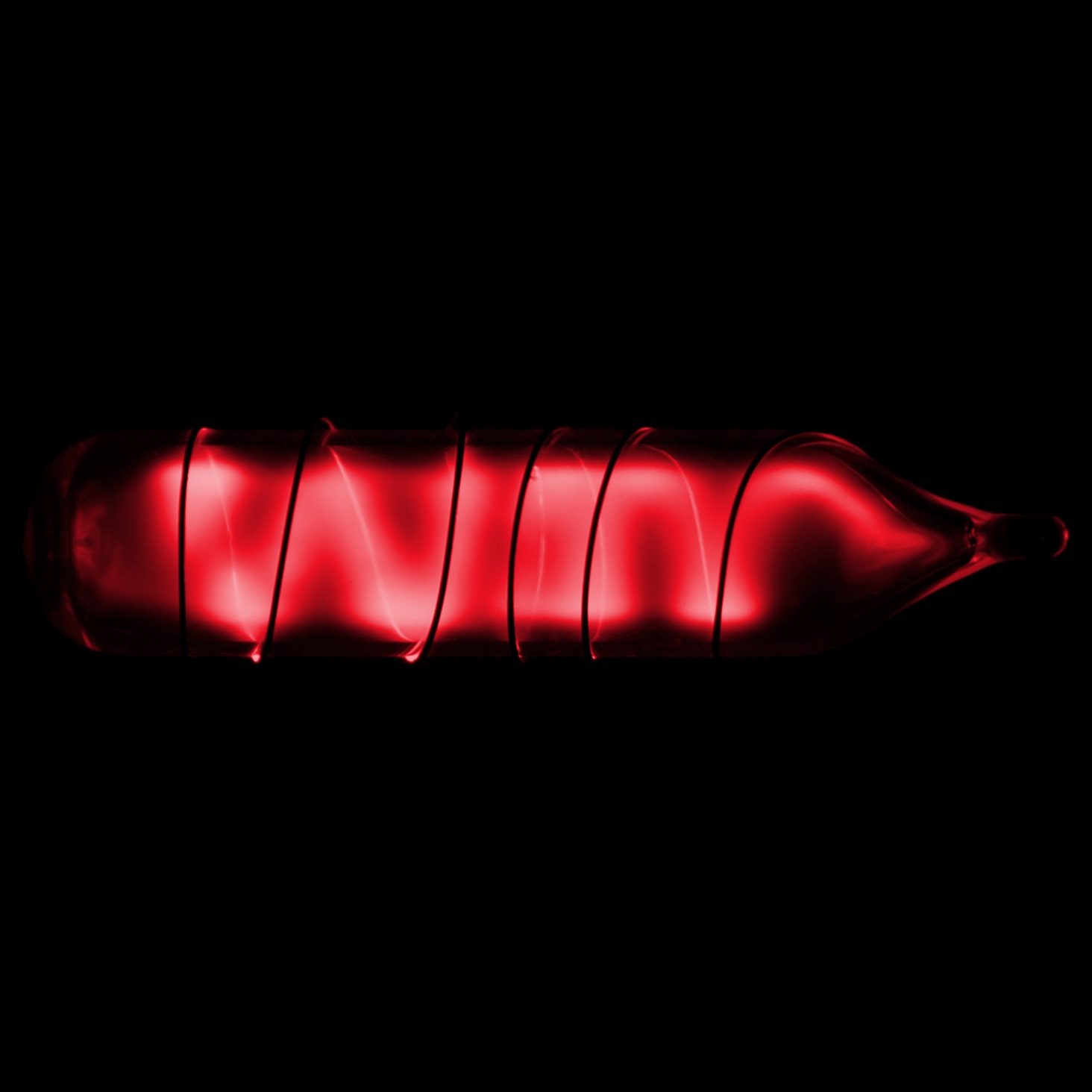
Radon facts and properties
- Atomic number
- 86
- Symbol
- Rn
- Atomic mass
- 222 u
- Category
- Noble gas
- Group / period / block
- 18 / 6 / p-block
- State at room temperature
- Gas
- Appearance
- colourless gas that sometimes glows green or red in glass tubes with electricity
- Density
- 9.73 g/L
- Melting point
- 202 K (-71.1 °C)
- Boiling point
- 211.5 K (-61.6 °C)
- Electron configuration
- 1s2 2s2 2p6 3s2 3p6 4s2 3d10 4p6 5s2 4d10 5p6 6s2 4f14 5d10 6p6
- Electrons per shell
- 2, 8, 18, 32, 18, 8
- Electronegativity (Pauling)
- 2.2
- Common oxidation states
- 0
- Crystal structure
- face-centered cubic
- Magnetic ordering
- Non-magnetic
- Radioactive
- Yes
- CAS number
- 10043-92-2
What is Radon used for?
Once used in cancer treatment; today homes are checked to keep it out.
Who discovered Radon and where does its name come from?
Discovered by Ernest Rutherford and Robert B. Owens first isolated by William Ramsay and Robert Whytlaw-Gray (1899).
The name comes from short for 'radium emanation': it is the gas that comes out of radium as it breaks down.
Radon questions and answers
What is Radon?
Radon is a radioactive gas with no colour or smell. It slowly seeps out of some rocks and soil, and can build up in basements.
What is the atomic number, atomic mass and electron configuration of Radon?
Radon has atomic number 86 (86 protons), symbol Rn and atomic mass 222 u. Its electron configuration is 1s2 2s2 2p6 3s2 3p6 4s2 3d10 4p6 5s2 4d10 5p6 6s2 4f14 5d10 6p6, with electrons arranged in shells as 2, 8, 18, 32, 18, 8.
What is Radon used for?
Once used in cancer treatment; today homes are checked to keep it out.
Who discovered Radon?
Radon was discovered by Ernest Rutherford and Robert B. Owens in 1900.
Where does the name Radon come from?
The name Radon comes from short for 'radium emanation': it is the gas that comes out of radium as it breaks down.
← AstatineOpen the interactive periodic tableFrancium →
Data: PubChem (NCBI, public domain) and Wikipedia (CC BY-SA). Photos: images-of-elements.com, CC BY 3.0.