Aluminium (Al) – Element 13
Aluminium (or aluminum; see different endings) is a chemical element in the boron group with symbol Al and atomic number 13. It is a silvery-white, soft, nonmagnetic, ductile metal. Aluminium is the third most abundant element (after oxygen and silicon), and the most abundant metal, in the Earth's crust.
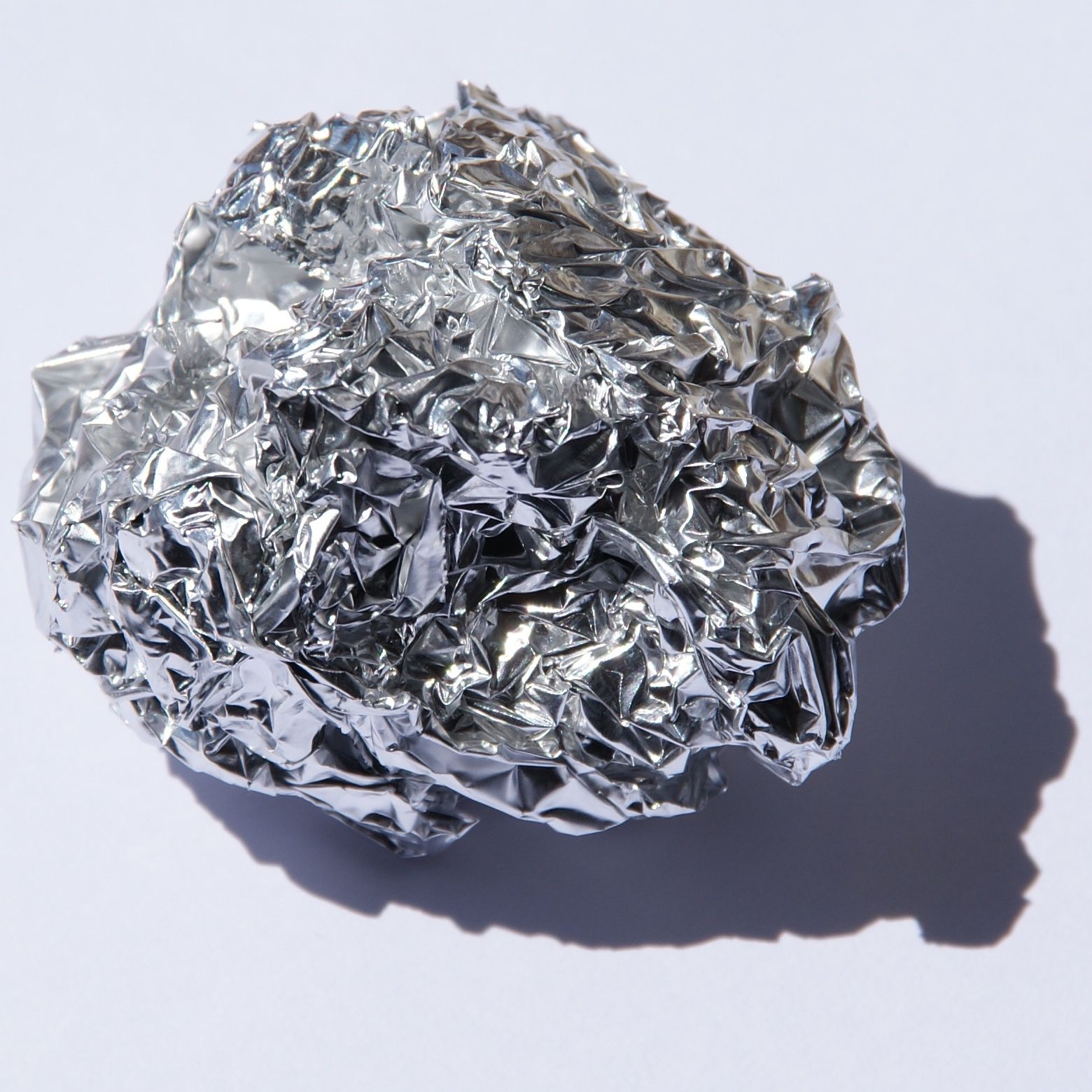
Aluminium facts and properties
- Atomic number
- 13
- Symbol
- Al
- Atomic mass
- 26.9815 u
- Category
- Post-transition metal
- Group / period / block
- 13 / 3 / p-block
- State at room temperature
- Solid
- Appearance
- silvery gray metallic
- Density
- 2.7 g/cm³
- Melting point
- 933.5 K (660.3 °C)
- Boiling point
- 2743 K (2469.9 °C)
- Electron configuration
- 1s2 2s2 2p6 3s2 3p1
- Electrons per shell
- 2, 8, 3
- Electronegativity (Pauling)
- 1.61
- Common oxidation states
- +3
- Crystal structure
- face-centered cubic
- Magnetic ordering
- Paramagnetic
- Radioactive
- No
- CAS number
- 7429-90-5
What is Aluminium used for?
Drinks cans, foil, aircraft and vehicle bodies, window frames and power lines.
Who discovered Aluminium and where does its name come from?
Discovered by Hans Christian Ørsted (1824).
The name comes from from alumine, obsolete name for alumina.
Aluminium questions and answers
What is Aluminium?
Aluminium (or aluminum; see different endings) is a chemical element in the boron group with symbol Al and atomic number 13. It is a silvery-white, soft, nonmagnetic, ductile metal. Aluminium is the third most abundant element (after oxygen and silicon), and the most abundant metal, in the Earth's crust.
What is the atomic number, atomic mass and electron configuration of Aluminium?
Aluminium has atomic number 13 (13 protons), symbol Al and atomic mass 26.9815 u. Its electron configuration is 1s2 2s2 2p6 3s2 3p1, with electrons arranged in shells as 2, 8, 3.
What is Aluminium used for?
Drinks cans, foil, aircraft and vehicle bodies, window frames and power lines.
Who discovered Aluminium?
Aluminium was discovered by Hans Christian Ørsted in 1824.
Is Aluminium magnetic?
Only very weakly. Aluminium is paramagnetic: it is pulled a tiny bit towards a magnet, far too little to feel with a fridge magnet.
← MagnesiumOpen the interactive periodic tableSilicon →
Data: PubChem (NCBI, public domain) and Wikipedia (CC BY-SA). Photos: images-of-elements.com, CC BY 3.0.