Einsteinium (Es) – Element 99
Einsteinium is a radioactive metal named after the scientist Albert Einstein. It was first found in the dust from a huge nuclear bomb test in 1952.
Einsteinium is a synthetic element with symbol Es and atomic number 99. It is the seventh transuranic element, and an actinide. Einsteinium was discovered as a component of the debris of the first hydrogen bomb explosion in 1952, and named after Albert Einstein.
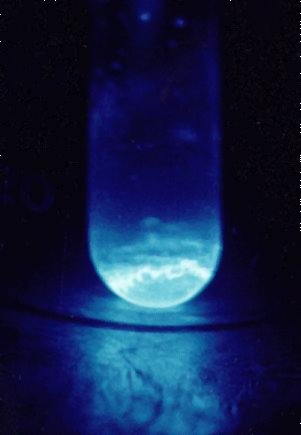
Einsteinium facts and properties
- Atomic number
- 99
- Symbol
- Es
- Atomic mass
- 252 u
- Category
- Actinide
- Group / period / block
- – / 7 / f-block
- State at room temperature
- Solid
- Appearance
- silver-colored
- Density
- 8.84 g/cm³
- Melting point
- 1133 K (859.9 °C)
- Boiling point
- 1269 K (995.9 °C)
- Electron configuration
- 1s2 2s2 2p6 3s2 3p6 4s2 3d10 4p6 5s2 4d10 5p6 6s2 4f14 5d10 6p6 7s2 5f11
- Electrons per shell
- 2, 8, 18, 32, 29, 8, 2
- Electronegativity (Pauling)
- 1.3
- Common oxidation states
- +3
- Crystal structure
- face-centered cubic
- Magnetic ordering
- Paramagnetic
- Radioactive
- Yes
- CAS number
- 7429-92-7
What is Einsteinium used for?
Only scientific research.
Who discovered Einsteinium and where does its name come from?
Discovered by Lawrence Berkeley National Laboratory (1952).
The name comes from after Albert Einstein.
Einsteinium questions and answers
What is Einsteinium?
Einsteinium is a radioactive metal named after the scientist Albert Einstein. It was first found in the dust from a huge nuclear bomb test in 1952.
What is the atomic number, atomic mass and electron configuration of Einsteinium?
Einsteinium has atomic number 99 (99 protons), symbol Es and atomic mass 252 u. Its electron configuration is 1s2 2s2 2p6 3s2 3p6 4s2 3d10 4p6 5s2 4d10 5p6 6s2 4f14 5d10 6p6 7s2 5f11, with electrons arranged in shells as 2, 8, 18, 32, 29, 8, 2.
What is Einsteinium used for?
Only scientific research.
Who discovered Einsteinium?
Einsteinium was discovered by Lawrence Berkeley National Laboratory in 1952.
Is Einsteinium magnetic?
Only very weakly. Einsteinium is paramagnetic: it is pulled a tiny bit towards a magnet, far too little to feel with a fridge magnet.
← CaliforniumOpen the interactive periodic tableFermium →
Data: PubChem (NCBI, public domain) and Wikipedia (CC BY-SA). Photos: images-of-elements.com, CC BY 3.0.