Krypton (Kr) – Element 36
Krypton (from Greek:κρυπτός kryptos "the hidden one") is a chemical element with symbol Kr and atomic number 36. It is a member of group 18 (noble gases) elements. A colorless, odorless, tasteless noble gas, krypton occurs in trace amounts in the atmosphere, is isolated by fractionally distilling liquefied air, and is often used with other rare gases in fluorescent lamps.
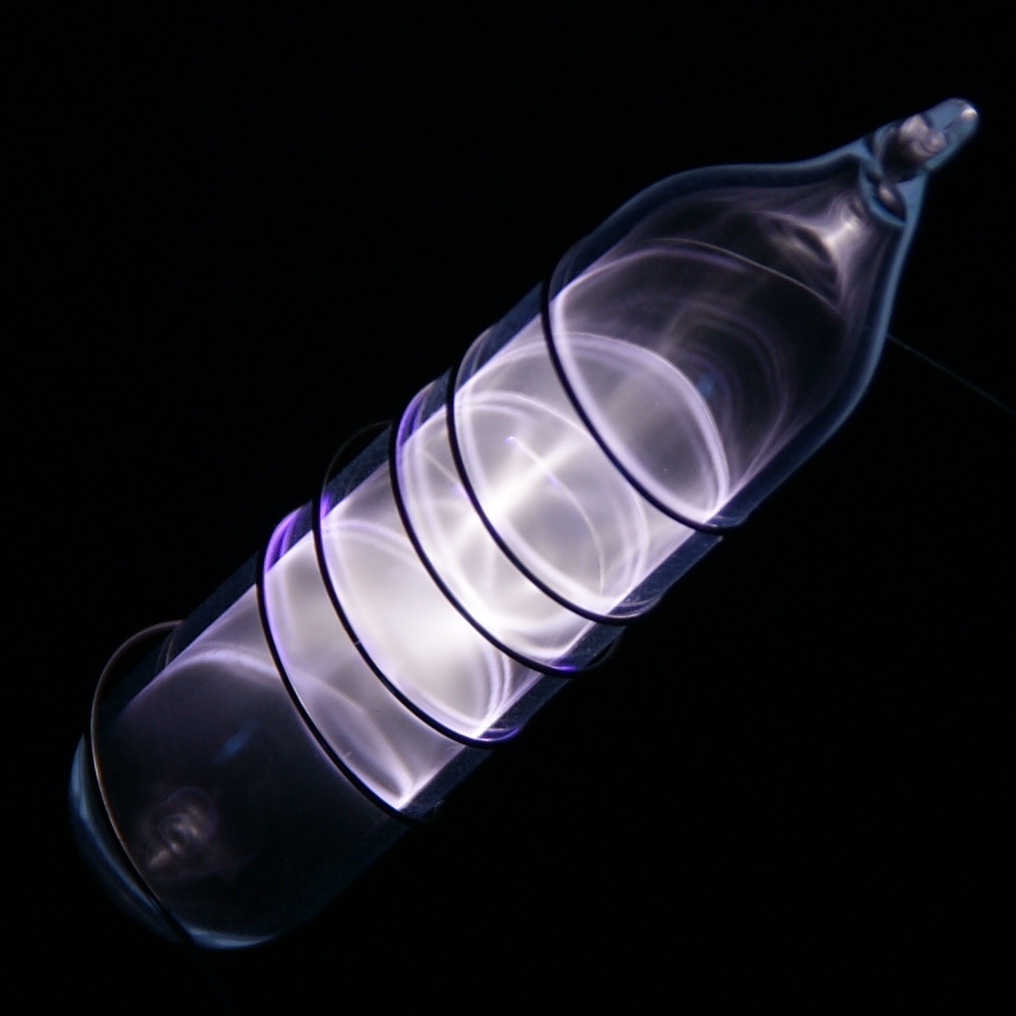
Krypton facts and properties
- Atomic number
- 36
- Symbol
- Kr
- Atomic mass
- 83.7982 u
- Category
- Noble gas
- Group / period / block
- 18 / 4 / p-block
- State at room temperature
- Gas
- Appearance
- colorless gas, exhibiting a whitish glow in a high electric field
- Density
- 3.749 g/L
- Melting point
- 115.8 K (-157.4 °C)
- Boiling point
- 119.9 K (-153.2 °C)
- Electron configuration
- 1s2 2s2 2p6 3s2 3p6 4s2 3d10 4p6
- Electrons per shell
- 2, 8, 18, 8
- Electronegativity (Pauling)
- 3
- Common oxidation states
- 0
- Crystal structure
- face-centered cubic
- Magnetic ordering
- Diamagnetic
- Radioactive
- No
- CAS number
- 7439-90-9
What is Krypton used for?
High-performance lighting, photography flash and excimer lasers.
Who discovered Krypton and where does its name come from?
Discovered by William Ramsay and Morris Travers first isolated by William Ramsay and Morris Travers (1898).
The name comes from from Greek κρυπτός, 'hidden'.
Krypton questions and answers
What is Krypton?
Krypton (from Greek:κρυπτός kryptos "the hidden one") is a chemical element with symbol Kr and atomic number 36. It is a member of group 18 (noble gases) elements. A colorless, odorless, tasteless noble gas, krypton occurs in trace amounts in the atmosphere, is isolated by fractionally distilling liquefied air, and is often used with other rare gases in fluorescent lamps.
What is the atomic number, atomic mass and electron configuration of Krypton?
Krypton has atomic number 36 (36 protons), symbol Kr and atomic mass 83.7982 u. Its electron configuration is 1s2 2s2 2p6 3s2 3p6 4s2 3d10 4p6, with electrons arranged in shells as 2, 8, 18, 8.
What is Krypton used for?
High-performance lighting, photography flash and excimer lasers.
Who discovered Krypton?
Krypton was discovered by William Ramsay and Morris Travers in 1898.
Is Krypton magnetic?
No. Krypton is diamagnetic, so it is very weakly pushed away by a magnet. You would not notice it in everyday life.
← BromineOpen the interactive periodic tableRubidium →
Data: PubChem (NCBI, public domain) and Wikipedia (CC BY-SA). Photos: images-of-elements.com, CC BY 3.0.