Molybdenum (Mo) – Element 42
Molybdenum is a chemical element with symbol Mo and atomic number 42. The name is from Neo-Latin molybdaenum, from Ancient Greek Μόλυβδος molybdos, meaning lead, since its ores were confused with lead ores. Molybdenum minerals have been known throughout history, but the element was discovered (in the sense of differentiating it as a new entity from the mineral salts of other metals) in 1778 by Carl Wilhelm Scheele.
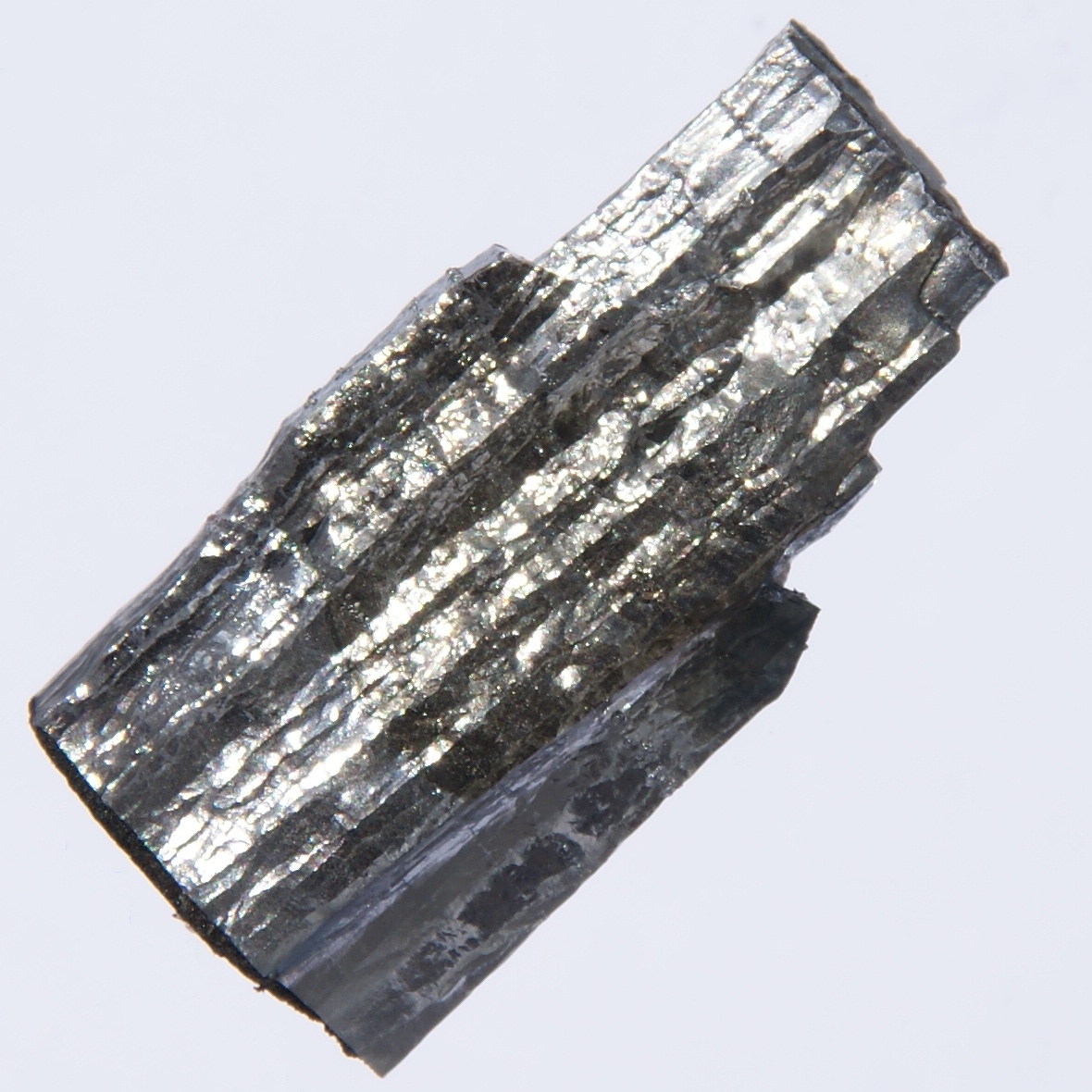
Molybdenum facts and properties
- Atomic number
- 42
- Symbol
- Mo
- Atomic mass
- 95.951 u
- Category
- Transition metal
- Group / period / block
- 6 / 5 / d-block
- State at room temperature
- Solid
- Appearance
- gray metallic
- Density
- 10.28 g/cm³
- Melting point
- 2896 K (2622.9 °C)
- Boiling point
- 4912 K (4638.9 °C)
- Electron configuration
- 1s2 2s2 2p6 3s2 3p6 4s2 3d10 4p6 5s1 4d5
- Electrons per shell
- 2, 8, 18, 13, 1
- Electronegativity (Pauling)
- 2.16
- Common oxidation states
- +6
- Crystal structure
- body-centered cubic
- Magnetic ordering
- Paramagnetic
- Radioactive
- No
- CAS number
- 7439-98-7
What is Molybdenum used for?
High-strength steel alloys, catalysts in petroleum refining, and lubricants (MoS2).
Who discovered Molybdenum and where does its name come from?
Discovered by Carl Wilhelm Scheele first isolated by Peter Jacob Hjelm (1778).
The name comes from from Greek Μόλυβδος, 'lead', since its ores were confused with lead ores.
Molybdenum questions and answers
What is Molybdenum?
Molybdenum is a chemical element with symbol Mo and atomic number 42. The name is from Neo-Latin molybdaenum, from Ancient Greek Μόλυβδος molybdos, meaning lead, since its ores were confused with lead ores. Molybdenum minerals have been known throughout history, but the element was discovered (in the sense of differentiating it as a new entity from the mineral salts of other metals) in 1778 by Carl Wilhelm Scheele.
What is the atomic number, atomic mass and electron configuration of Molybdenum?
Molybdenum has atomic number 42 (42 protons), symbol Mo and atomic mass 95.951 u. Its electron configuration is 1s2 2s2 2p6 3s2 3p6 4s2 3d10 4p6 5s1 4d5, with electrons arranged in shells as 2, 8, 18, 13, 1.
What is Molybdenum used for?
High-strength steel alloys, catalysts in petroleum refining, and lubricants (MoS2).
Who discovered Molybdenum?
Molybdenum was discovered by Carl Wilhelm Scheele in 1778.
Is Molybdenum magnetic?
Only very weakly. Molybdenum is paramagnetic: it is pulled a tiny bit towards a magnet, far too little to feel with a fridge magnet.
← NiobiumOpen the interactive periodic tableTechnetium →
Data: PubChem (NCBI, public domain) and Wikipedia (CC BY-SA). Photos: images-of-elements.com, CC BY 3.0.